
Engaging with Parliament: annual survey of the New Zealand Public (2025)
Last updated: 17 October 2025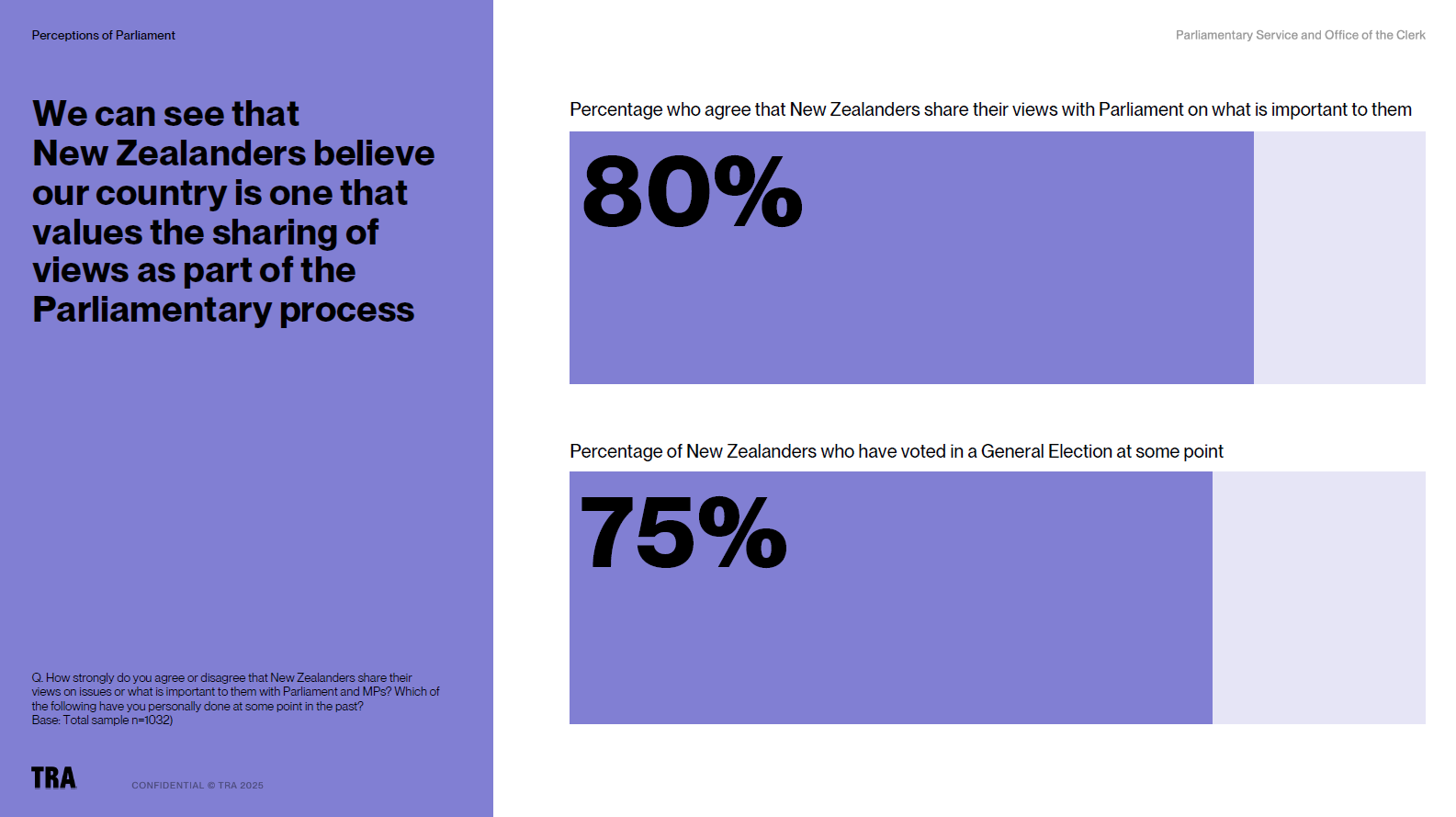
The purpose of this annual research is to help measure the effectiveness of the Parliament Engagement Strategy over time. This report provides an update on key attitudes about Parliament that New Zealanders have, and awareness of and participation in democratic processes.
Click here to see the results for 2025.
Prior to the 2025 report, the most recent research was conducted in early 2023. In initiating the current round of research, Parliamentary Service and the Office of the Clerk wanted to focus on uncovering actionable insights and recommendations to drive forward our engagement activity. Following a procurement process, The Research Agency (TRA) was selected as the successful supplier, and they worked alongside staff from different teams within Parliamentary Service and the Office of the Clerk to design and undertake the research.
The purpose of this research is to understand public perceptions of, and experiences engaging with, Parliament, and to measure the effectiveness of the Parliament Engagement Strategy.
Key findings:
- The majority of respondents feel that New Zealanders as a whole value engagement in the democratic process and being able to tell Parliament what they think.
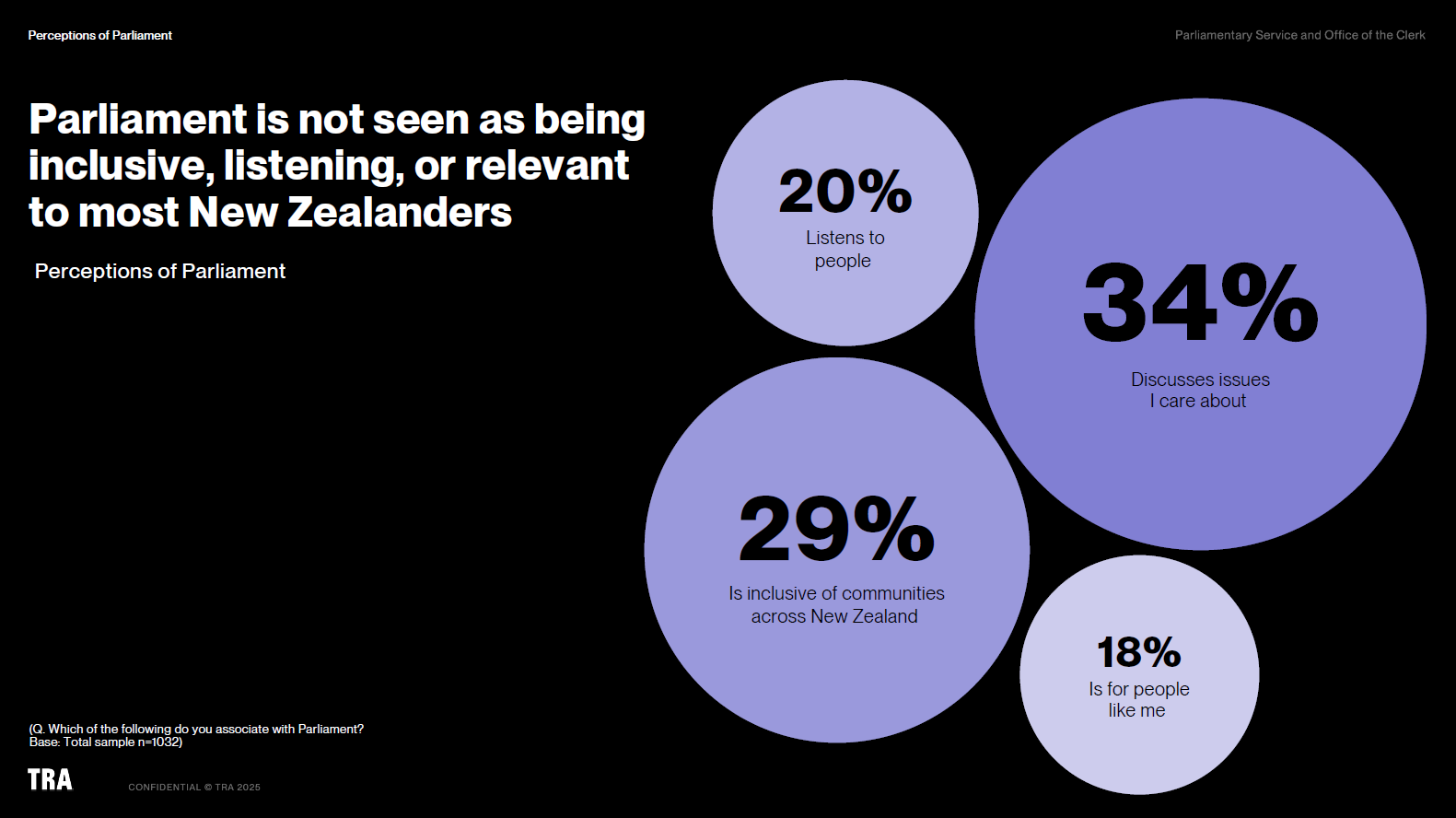
- However, fewer than a third of respondents felt that Parliament listens to people, fewer than a quarter felt that Parliament was for people like them, and the majority felt that Parliament does not discuss issues they care about.
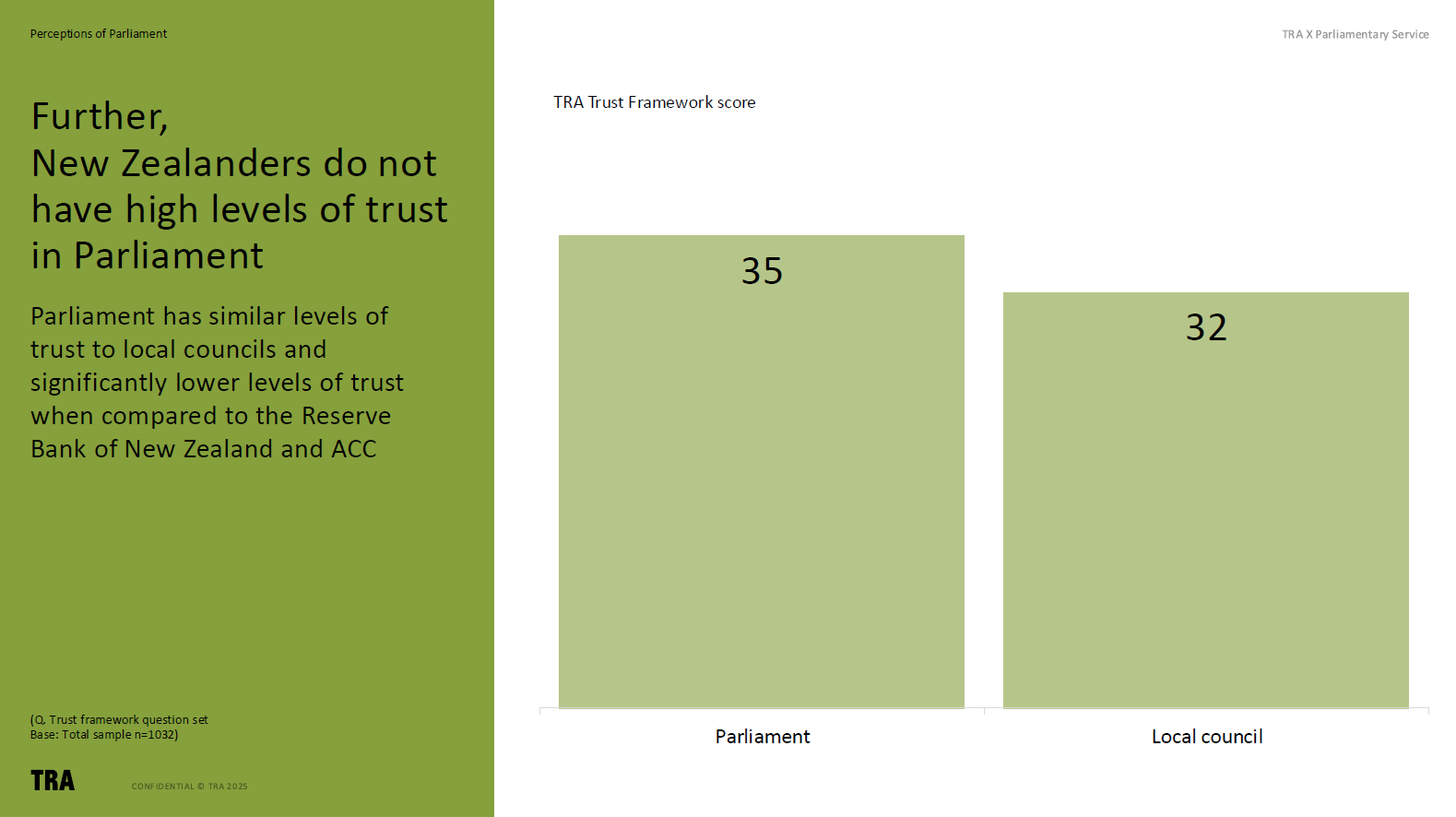
- Trust in Parliament is low
Overall, the results show:
- New Zealanders believe our country is one that values the sharing of views as part of the parliamentary process.
- More than half of New Zealanders confuse the role of Parliament with that of Government.
- That most New Zealanders are happy with their current level of engagement with Parliament, however some populations do want to engage more than others – youth, Pacific Peoples and Māori stand out among demographic groups.
- Parliament has similar levels of trust to local councils and significantly lower levels of trust when compared to the Reserve Bank of New Zealand and ACC.
- Parliament is not seen as being inclusive, listening, or relevant to most New Zealanders. Only 29% of respondents felt Parliament was inclusive of communities across New Zealand, and only 18 percent felt Parliament “is for people like me”.
- Māori and Asian people particularly are less likely to feel Parliament is welcoming to other cultures.
- The top motivator to increase engagement with Parliament would be ensuring people can see how their views were considered (41%). More than half (55%) of New Zealanders indicated that a barrier to them engaging more with Parliament is the feeling that their engagement won’t have any impact.
- In addition, New Zealanders would be more likely to engage with Parliament if its processes were easy to understand (36%), there was better education around how Parliament works (35%), and there was more information available on how to participate (33%).
Next steps
There are four key areas to improve engagement:
- Communicating simply and clearly
- Building knowledge
- Increasing ease of participation
- Enhancing the sense of emotional reward for participation with Parliament

