
House Happenings
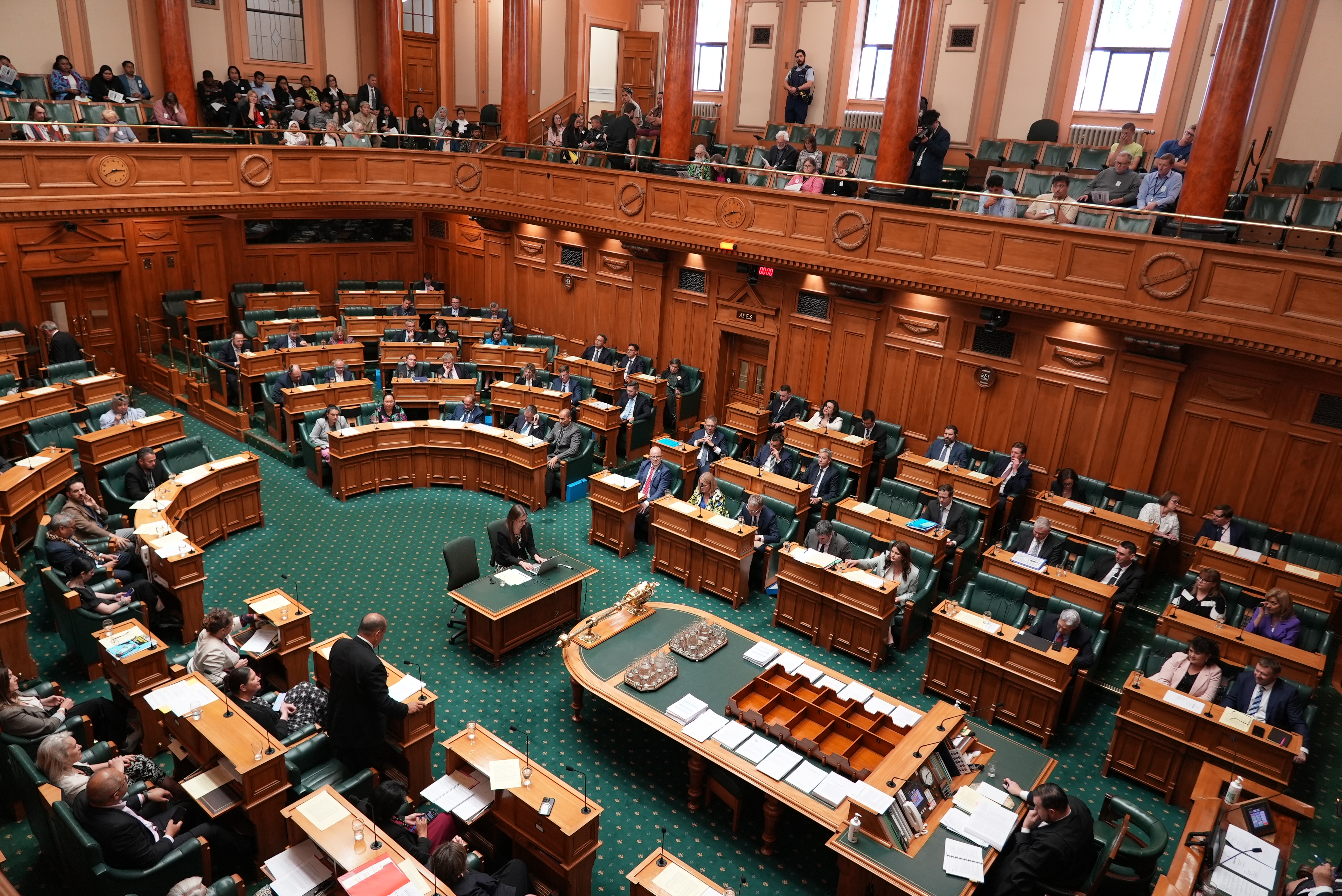
Last updated: 04 September 2026During sitting weeks, the House of Representatives meets in the Debating Chamber to debate legislation, ask and answer questions, and more. So, what happened in the House the last time it sat? We break it down for you below:
Valedictory statements
Two members gave their valedictory statements. Click on their names to read their statements in Hansard.
Bills introduced
Three bills were introduced this week:
KiwiSaver (First Home or Farm) Amendment Bill
- This bill amends the KiwiSaver Act 2006 to enable members to withdraw their KiwiSaver funds to contribute to the purchase of a farm through an entity or a trust where the farm will also be the member's first home and principal place of residence.
Anti-Money Laundering and Countering Financing of Terrorism (Omnibus) Bill
- The objectives of this omnibus bill are to deliver regulatory relief to businesses, align New Zealand's domestic system with international standards, and provide better intelligence and enforcement tools to tackle organised crime.
Imprest Supply (Second for 2026/27) Bill
- This bill is required to ensure that the Government has sufficient supply to implement Cabinet decisions made or otherwise finalised after the contents of the 2026/27 Estimates were closed off and to meet contingencies in excess of the amounts provided in the Appropriation (2026/27 Estimates) Bill.
Consideration of Privileges Committee report
The debate on the Report of the Privileges Committee on the Question of privilege concerning evidence given by the Ministry of Business, Innovation and Employment to the Education and Workforce Committee was completed. Click here to read the debate in Hansard.
Estimates debate
The committee stage of the Appropriation (2026/27 Estimates) Bill (the Estimates debate) was completed.
- The debate on the Housing portfolio was completed.
- The debate on the Children portfolio was completed.
Urgent Debate
On Tuesday, an urgent debate on delays at the Ministry of Social Development that led to benefits being suspended was held. Click here to read the debate in Hansard.
Government legislation
The Local Government (Rates Capping) Amendment Bill had its first reading and was referred to the Finance and Expenditure Committee.
- The single broad policy of this omnibus bill is to promote fiscal responsibility and predictability of costs to ratepayers by providing a framework to limit annual increases in certain kinds of rates.
- This bill has now opened for public submissions. Click here to make a submission.
The Disability Support Services Bill had its third reading.
- This bill provides a new foundational legislative framework to strengthen and stabilise the provision of disability support services.
The Serious Fraud Office Amendment Bill had its third reading.
- This bill amends the Serious Fraud Office Act 1990 to ensure that the Serious Fraud Office can more effectively carry out its role by updating provisions relating to search warrants and evidence admissibility.
The committee stage of the Oranga Tamariki (Responding to Serious Youth Offending) Amendment Bill was interrupted during the debate on Part 1.
- This bill establishes a young serious offender declaration and a new military-style academy order in the Oranga Tamariki Act 1989.
The Ngā Hapū o Te Iwi o Whanganui Claims Settlement Bill had its second reading, committee stage and third reading.
- This bill seeks to give effect to certain matters set out in the Ngā Hapū o Te Iwi o Whanganui Deed of Settlement, signed on 2 May 2026.
The Ngāti Ruapani mai Waikaremoana Claims Settlement Bill had its second reading, committee stage, and third reading.
- This bill records the acknowledgements and apology by the Crown to Ngāti Ruapani mai Waikaremoana in the relevant deed of settlement and gives effect to redress set out in the deed that requires legislation.
The Imprest Supply (Second for 2026/27) Bill had its first, second, and third readings.
The Appropriation (2026/27 Estimates) Bill had its third reading.
General debate and members’ day
A general debate and members’ day took place on Wednesday. Click here to read the debate in Hansard.
The general debate occurs during most Wednesday sittings of the House, following oral questions and any urgent debate, if one has been allowed on that day. The debate is an opportunity for members to discuss miscellaneous topics that would otherwise be unlikely to come before the House for debate.
Members’ days take place on alternate Wednesdays when the House is sitting. On a members’ day, private, local, and members’ business takes precedence. Click here for more information.
Private and local legislation
The Ōtautahi Community Housing Trust (Trust Variation) Bill had its committee stage and third reading.
- This bill amends the Ōtautahi Community Housing Trust deed to allow the trust to provide social and affordable rental housing and associated services beyond Christchurch and Banks Peninsula.
The Trust Horizon (Trust Variation) Bill had its committee stage and third reading.
- This bill seeks to amend the terms of trust for Trust Horizon to broaden its objects to include any charitable purpose within Whakatāne, Kawerau, Ōpōtiki, and Kaingaroa.
Members’ legislation
The Maritime Transport (Lifejackets on Recreational Craft) Amendment Bill had its third reading.
- This bill provides that recreational craft of 6 metres or less cannot be used unless every person on board wears a life jacket.

