
A History of NZSL and Parliament
Last updated: 19 September 2025New Zealand Sign Language (NZSL) is used by nearly 23,000 people in New Zealand, including both Deaf and hearing people. The language is central to Deaf culture. This NZSL week, we reflect upon the history of the language and the part that Parliament has played to protect and promote it.
NZSL became an official language with the passing of the New Zealand Sign Language Bill in April 2006. This was an important step in protecting the language and normalising NZSL as a way for Deaf people to communicate.
With the passing of this law, sign language interpreters were made a legal right, and interpreter use increased across different areas, starting with the justice system. Prior to this, Deaf people relied on lip-reading and verbal communication.
Parliament also made provisions to allow some debates to be interpreted. The special arrangements were made when debates were held that had particular significance to the Deaf and hard-of-hearing community.
Timeline:
In 2012, Parliament’s first Deaf member of parliament, Mojo Mathers, delivered her maiden speech with the assistance of a sign language interpreter.
In 2014, the Standing Orders were amended to allow members to address the House in New Zealand Sign Language. According to these Standing orders, “A member may address the Speaker in English, Māori or New Zealand Sign Language”.
In 2018, it was announced that NZSL would be permanently provided for oral questions, however this ceased later that year due to the pressure it was placing on the pool of interpreters available to Deaf people.
In 2023, the Minister for Disability Issues, Priyanca Radhakrishnan, answered a question in the House using NZSL for the first time.
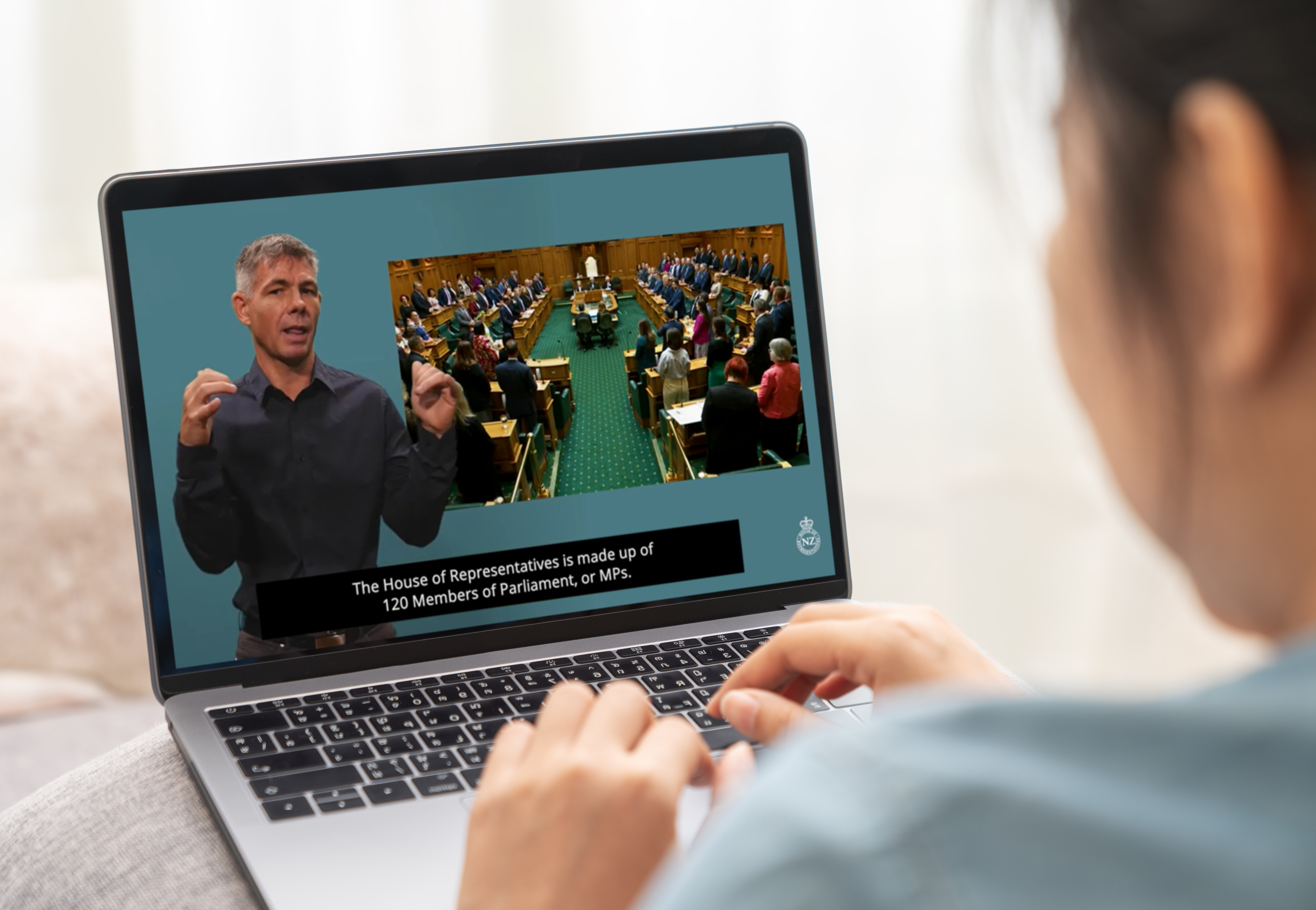
Parliament continues to promote accessibility through NZSL resources that enable people to learn more about Parliament in NZSL. You can find a series of videos that was created in partnership with Deaf Aotearoa to help explain parliamentary happenings here. Since the passing of the New Zealand Sign Language Bill, Parliament has made an increased effort to ensure that Deaf people are able to participate in democracy in their first language.
As former Speaker Rt Hon Jonathan Hunt said in 2004, “The process of interpretation is not merely a matter of transliterating word for word from one language into another.”

