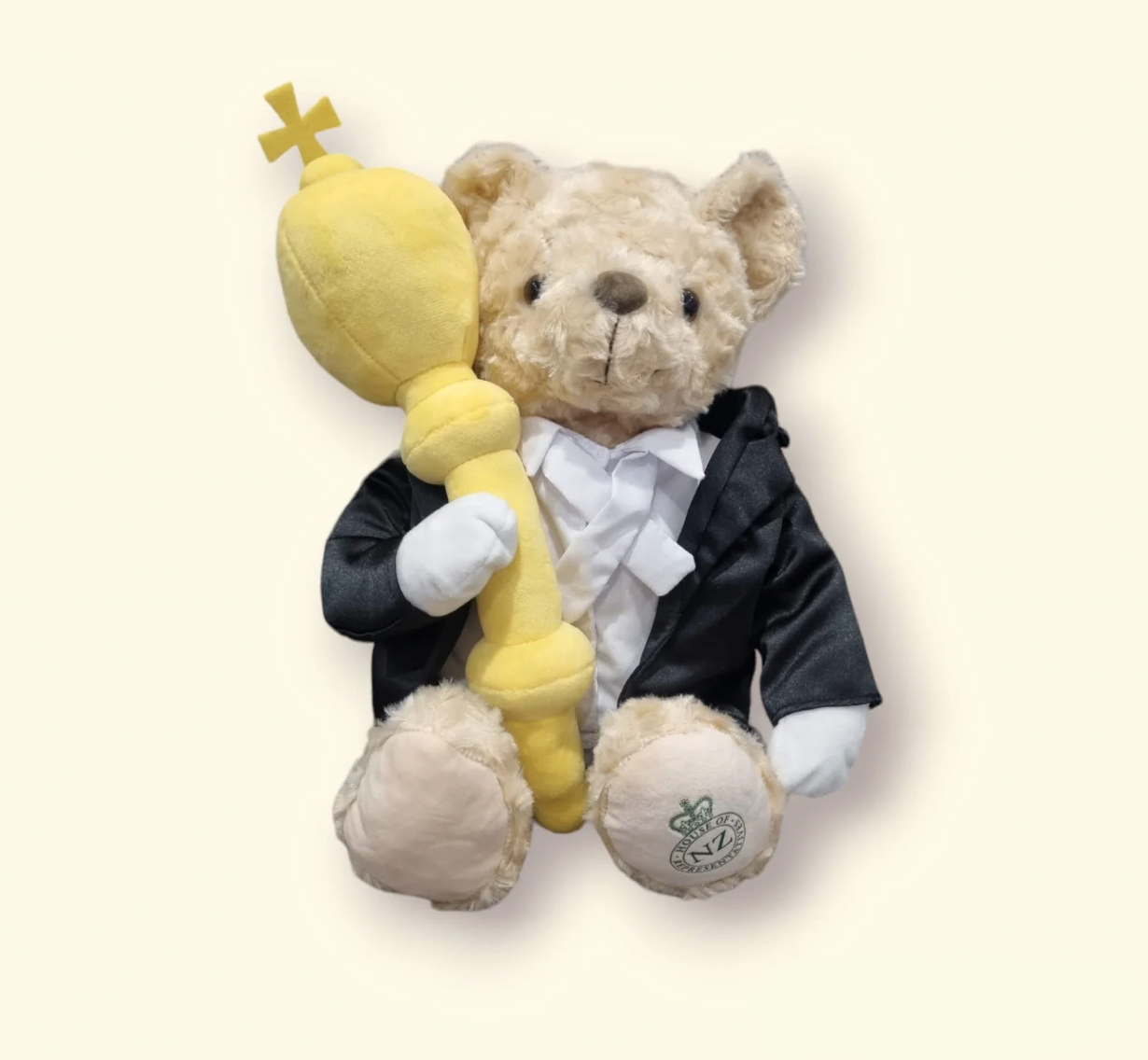
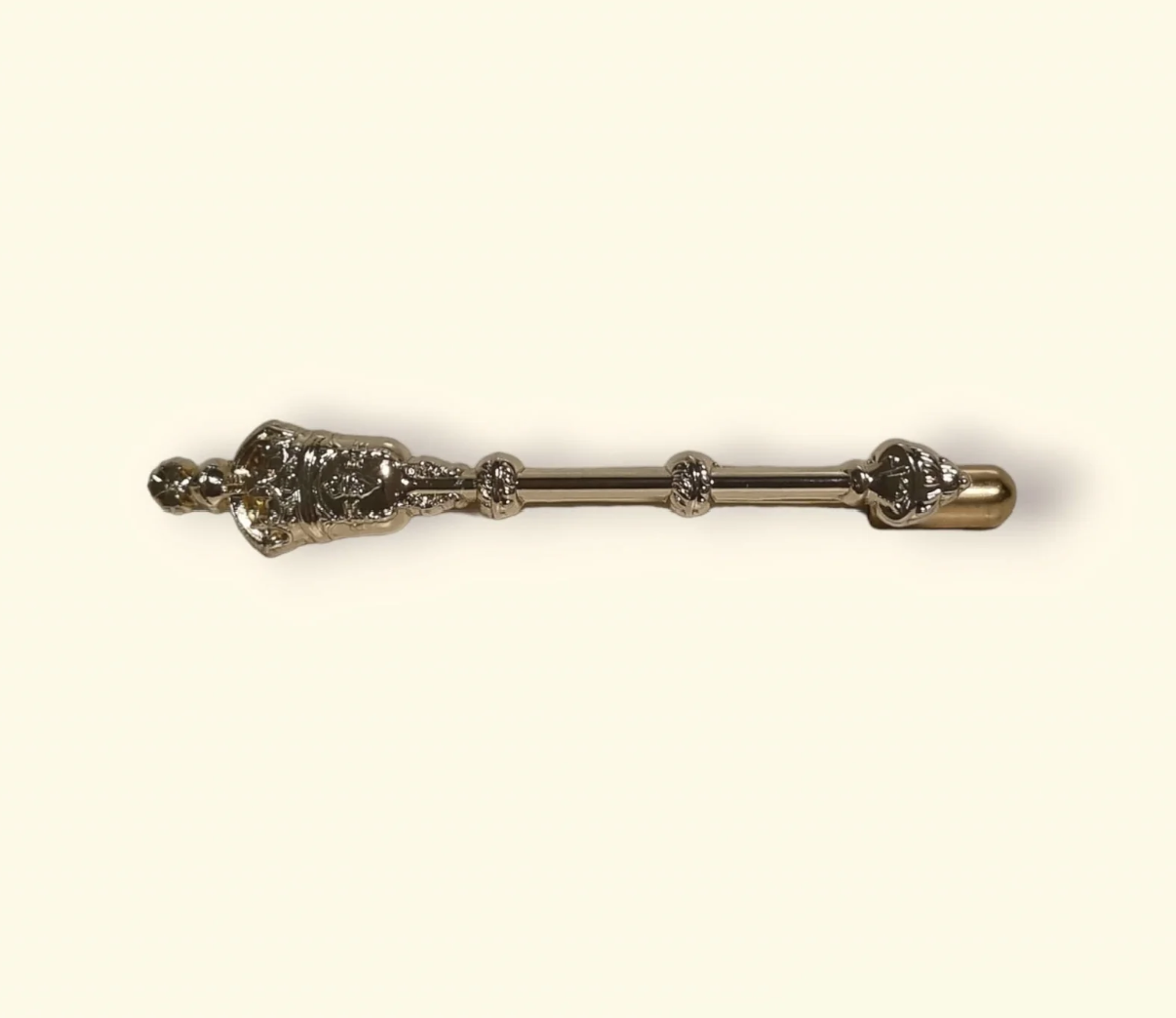
Celebrating Parliament’s ceremonial mace
Last updated: 07 October 2025This week, on Tuesday 7 October, we celebrate the 116 year anniversary of the current mace being presented to our Parliament.
The Mace
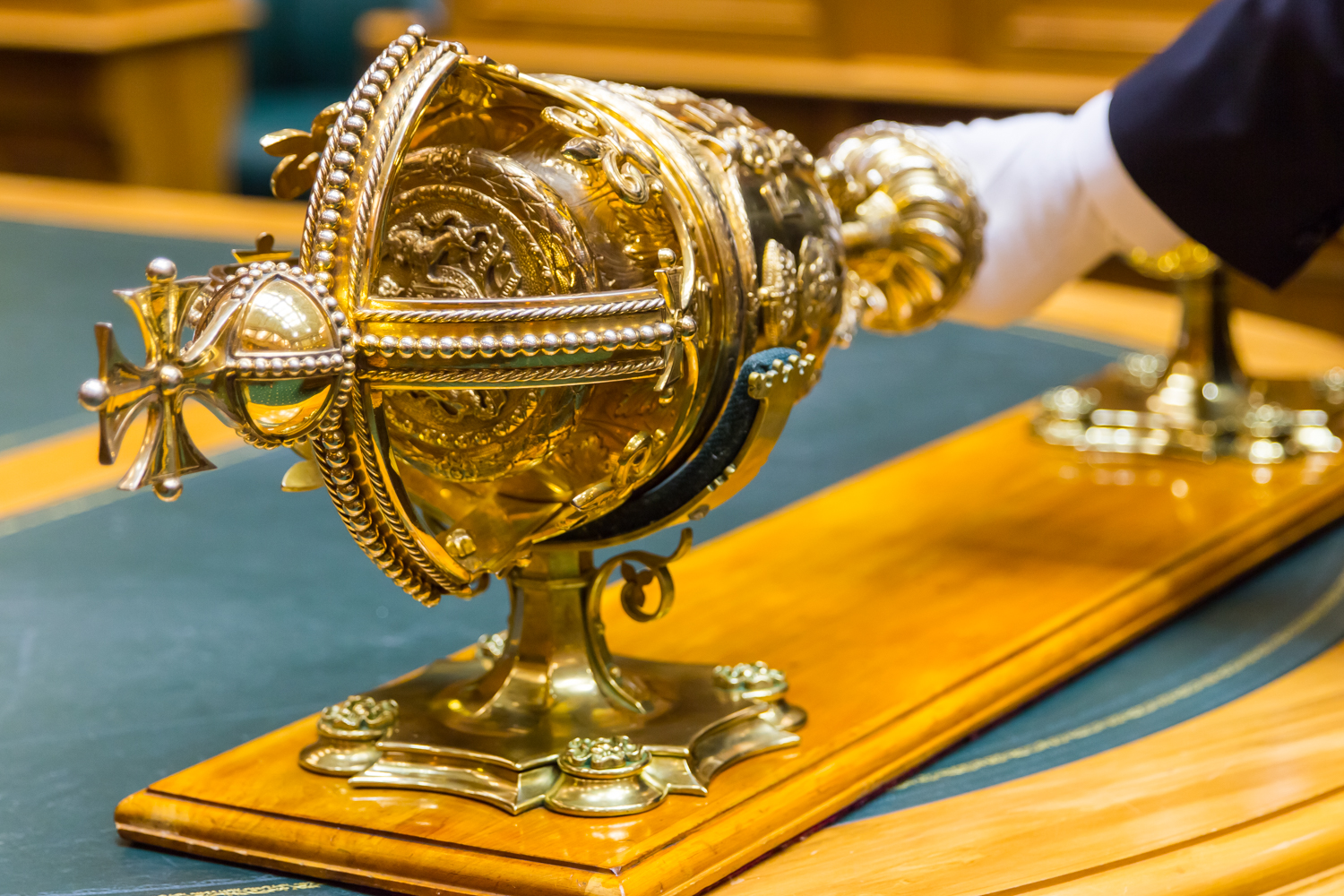
The mace is the symbol of the Speaker's authority, as the presiding officer of the New Zealand House of Representatives. It is carried in procession of the Serjeant-at-Arms when the Speaker enters Parliament to commence each day's sitting. The mace is placed on the Table of the House until the end of the day's sitting when it again returns in procession to the Speaker's office.
We have had three maces in our Parliament – The first mace was presented to the House of Representatives in 1866 by its retired first Speaker, Sir Charles Clifford, but was destroyed in the fire of 1907. A temporary wooden mace was then used until 7 October 1909, when the current mace was donated to the House by the Prime Minister, Sir Joseph Ward and his Cabinet. Our mace is a replica of the one used in the UK House of Commons except on one panel there is the Southern Cross and the initials NZ.
The mace is made of sterling silver gilded with 18-carat gold. It is 1.4 metres long and weighs 8.2kg.
The temporary wooden mace is on permanent display in a cabinet in the main visitor reception area of Parliament. You can also see the current mace on display in the same cabinet when Parliament is not sitting.
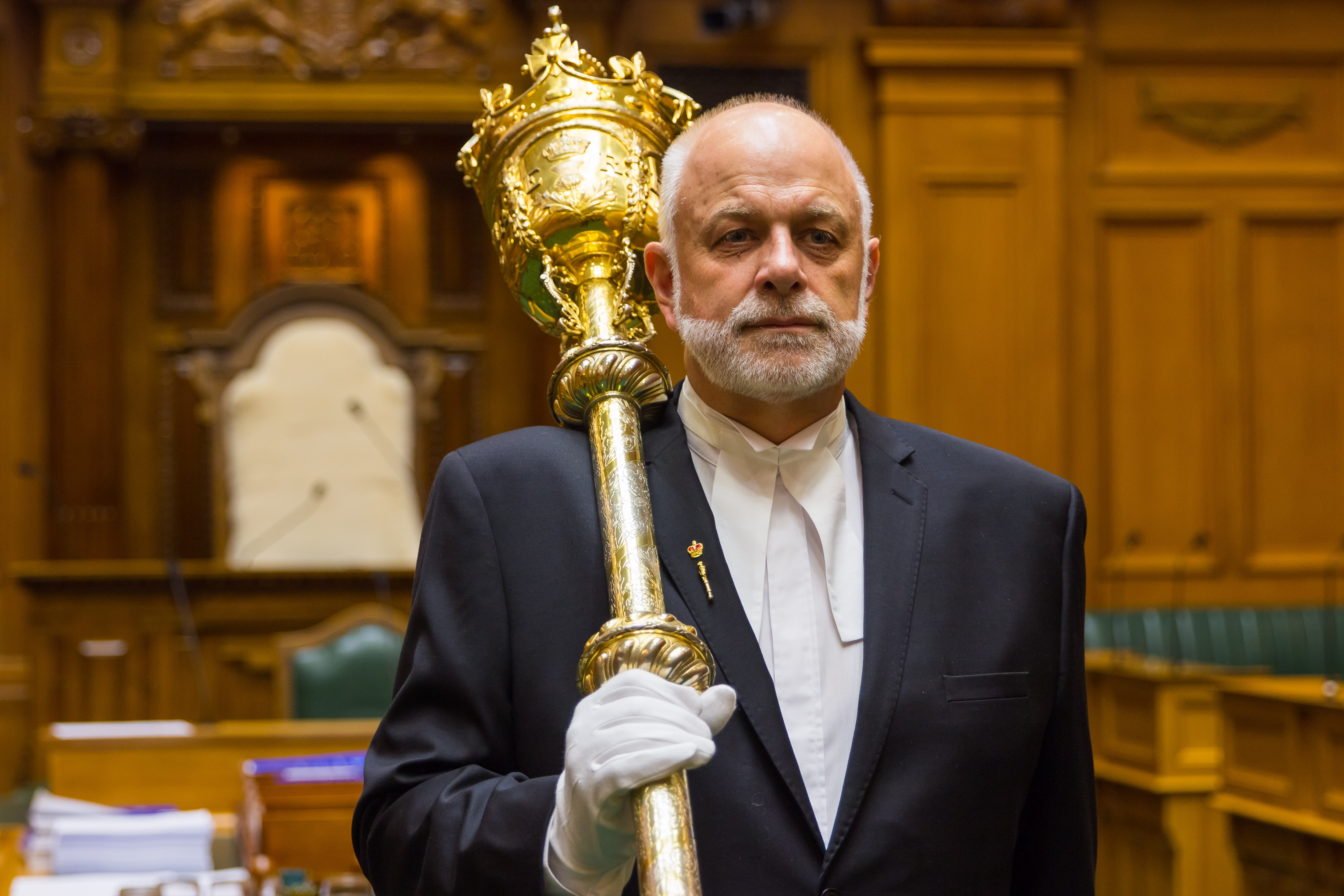
Role of the Serjeant-at-Arms in New Zealand Parliament
The office of Serjeant-at-Arms in the English Parliament dates back to 1415, when King Henry V appointed one of his bodyguards to carry out the orders of the English House of Commons.
This Serjeant-at-Arms could arrest anyone who obstructed Parliament’s business or offended the House of Commons. The mace gradually became a symbol of the authority of the Speaker of the House of Commons.
At the start of each sitting day, the Serjeant-at-Arms leads the Speaker of the House into the Debating Chamber, announces the Speaker’s arrival, and then places the mace on the Table of the House.
While Parliament is in session, the Serjeant-at-Arms is seated by the door of the Debating Chamber opposite the Speaker. If an MP becomes unruly or interrupts the debate too often, the Speaker can ask the Serjeant-at-Arms to remove that MP from the Chamber. If the Speaker requires it, the Serjeant-at-Arms can also bring an MP back.
Check out the Parliament gift shop for a souvenir of the historic mace